
| January 27, 2026
Not all foam materials protect a product equally during transport. Especially in industrial packaging. The way polyethylene foam is manufactured, especially the Crosslink process, directly influences its strength, lightness, and performance.
Choosing between single-stage Crosslink or double-stage is not just a technical decision, but a strategic one: it involves finding the right balance between process efficiency and the mechanical properties that your product needs.
In this article, we analyze the main differences between both types of Crosslink, their advantages, and in which cases one or the other is more suitable for packaging applications.
What is Crosslink in polyethylene foams?
The Crosslink, also known as crosslinked foam, is a chemical or physical process that binds the molecular chains of polyethylene, creating a more stable and resistant structure.
Thanks to this process, the foam obtains better mechanical properties, greater durability, and superior performance against impacts.
In packaging solutions, Crosslink is key to achieving light, yet robust materials, capable of functioning as true anticrash solutions in demanding logistic environments.
Single-stage Crosslink: process efficiency and control
How does single-stage Crosslink work?
In single-stage Crosslink, foam crosslinking and expansion occur in a single continuous process. This allows greater control of costs and production times.
Main advantages
High material efficiency, by reducing production stages.
Uniform structure, ideal for standard applications.
Excellent weight–strength ratio.
Suitable for large volumes of industrial packaging.
This type of Crosslink is often used when a reliable, consistent, and cost-effective material is required, especially in comparative packaging where cost-benefit is a key factor.
When is it advisable?
Single-stage Crosslink is ideal for products that require general protection against shocks and vibrations, without extreme demands for impact absorption or dimensional precision.
Double-stage Crosslink: maximum mechanical performance
What is double-stage Crosslink?
In this case, the Crosslink process is divided into two phases: first crosslinking and then controlled expansion. This allows obtaining a finer cellular structure and superior mechanical properties.
Main advantages
Greater resistance to compression and impact.
Better elastic recovery after repeated impacts.
Greater dimensional uniformity.
Notable performance in electronic protection and delicate components.
The Crosslink double-stage is highly valued in applications where product safety is a priority.
When is it advisable?
It is the recommended option for electronic equipment, high-value parts, or products with complex geometries that require precise fit and maximum energy absorption.
Practical comparison: single-stage or double-stage?
When analyzing comparative packaging, there is no single answer. The choice depends on the final use and the demands of the product:
Strength: double-stage offers greater mechanical performance.
Lightness: both types of Crosslink can be light, but single-stage usually optimizes weight–cost.
Cost: single-stage is more efficient in production.
Application: double-stage excels in electronic protection and specialized solutions.
From a material efficiency perspective, the key is not to oversize: using a double-stage Crosslink where it is not needed can raise costs without providing real benefits.
Impact of Crosslink in modern industrial packaging
In current industrial packaging, the trend is clear: lighter, stronger, and more sustainable materials. Crosslink allows the development of foams that reduce material use without compromising protection.
This translates into less weight in transport, reduction of losses due to damage, logistical optimization, and an improvement in the quality perception of the packaging.
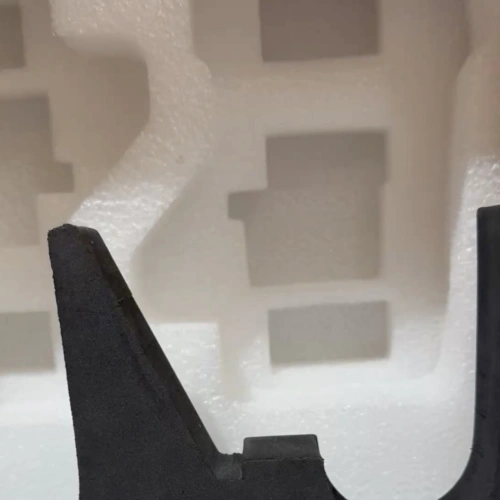
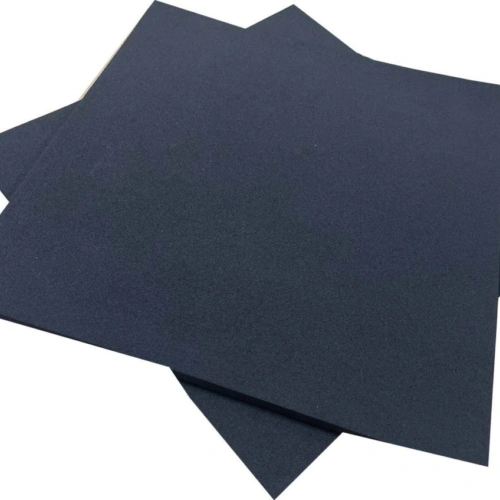
Moreover, both the single-stage and double-stage Crosslink can be integrated into anticrash solutions tailored to the product, from plates to custom inserts.
Which is more suitable for your application?
The decision between single-stage or double-stage Crosslink is not absolute. It depends on the level of expected impact, the value of the product to be protected, requirements for electronic protection, production volume, and cost and performance objectives.
In projects where a balance between performance and profitability is sought, a single stage is often sufficient. In critical applications, the double stage makes a difference. Therefore, choosing the right type of Crosslink is a strategic decision within the design of packaging.
Beyond comparing processes, it's about understanding what your product needs and how to achieve the best protection with the greatest material efficiency possible.
At Worldwide Foam, we develop solutions in crosslinked polyethylene foam adapted to each industry, combining technical expertise, innovation, and proven performance in industrial packaging.
Not sure which type of Crosslink is best for your application? Contact Worldwide Foam and receive specialized technical advice to design the ideal packaging solution for your products.


Worldwide Foam
We are leaders in the supply of closed cell polyethylene foam in Mexico. We support various industries by offering a wide range of products and complementary services.