
| March 03, 2026
In the aerospace industry, the selection of materials is not a minor detail: it is a strategic factor, as for example, each additional kilogram in an aircraft can directly impact fuel consumption and operational efficiency.
From structural design to the packaging of critical components, materials must meet extreme standards of safety, lightness, and performance.
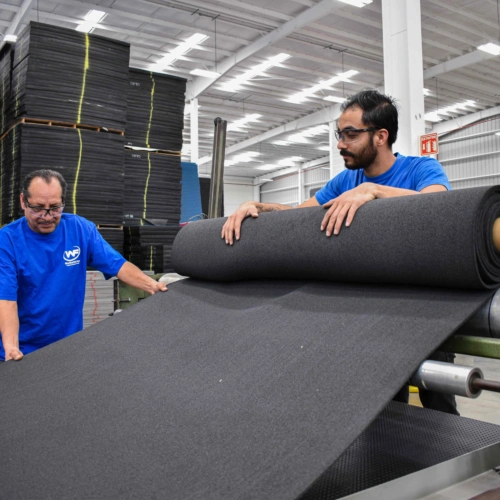
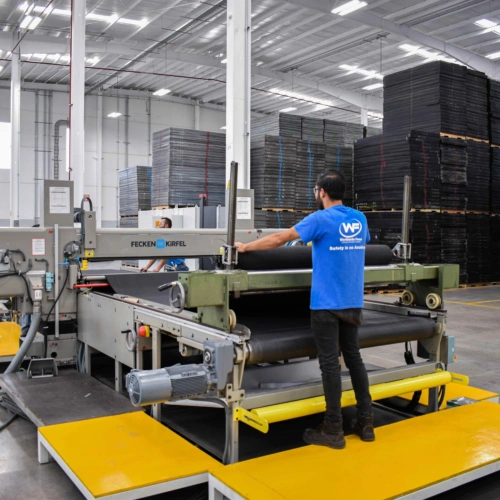
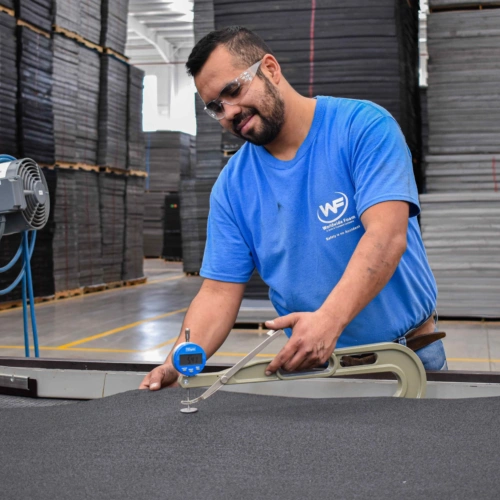
In this scenario, polyethylene foam has established itself as one of the most versatile and reliable materials for the aerospace industry, providing solutions in both manufacturing and specialized logistics.
In the following blog, specialized materials for this industry are described, including closed-cell elastomeric foam and why at Worldwide Foam we have the most innovative and specialized materials.
Aerospace industry: what is it and why does it require specialized materials?
When we talk about what the aerospace industry is, we refer to the sector dedicated to the design, manufacturing, maintenance, and operation of aircraft, satellites, and space systems. The aerospace industry combines advanced engineering, strict regulations, and highly controlled processes.
Every component, from structural parts to electronic systems, must meet requirements for lightness, mechanical strength, thermal stability, safety, and traceability.
Therefore, materials for the aerospace industry must offer superior technical properties and consistency in performance.
The role of polyethylene foam in the aerospace industry
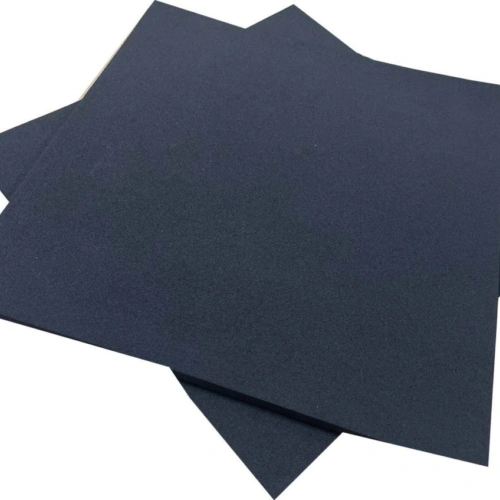
The polyethylene foam, especially in cross-linked versions (XLPE), has become a key ally within the aerospace industry thanks to its combination of lightness and strength.
Protection of critical components
During manufacturing and transportation, aerospace components require specialized protection. Polyethylene foam provides high impact absorption, dimensional stability, and compression resistance.
In the aerospace industry, where even minor damage can represent high costs, this protection is essential.
Weight optimization
Weight reduction is a constant priority in the aerospace industry. Polyethylene foam offers an excellent balance between low weight and structural strength, making it an efficient solution for internal applications and technical packaging.
Key applications in the aerospace industry
High precision technical packaging
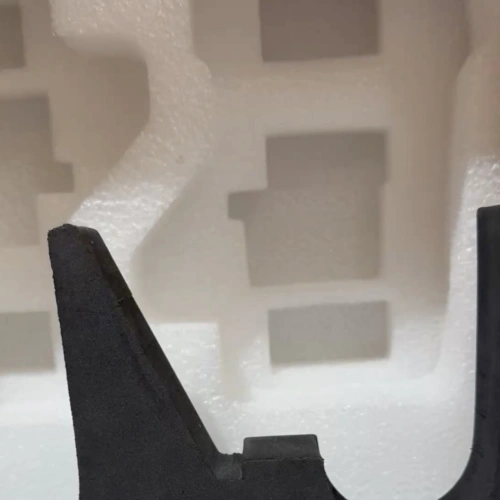
In the aerospace industry, packaging is not conventional. Custom solutions are required to protect parts with complex geometries. Polyethylene foam can be precisely cut using CNC or water jet, ensuring exact fits and maximum safety.
Thermal and acoustic insulation
In addition to mechanical protection, polyethylene foam also contributes to insulation. Here is where materials like elastomeric foam complement solutions within the aerospace industry, especially in applications where thermal and acoustic control is a priority.
Closed-cell elastomeric foam offers moisture resistance and remarkable thermal performance, making it suitable for controlled environments and auxiliary systems.
Aerospace industry in Mexico: growth and opportunity
The aerospace industry in Mexico has experienced sustained growth in recent decades. The country has become a strategic hub for the manufacture and assembly of aeronautical components.
Within this landscape, the demand for aerospace industry materials with certifications and proven technical performance has significantly increased.
Aerospace industry in Querétaro
The aerospace industry in Querétaro stands out as one of the main development poles of the sector in Latin America. Global companies have established operations in the region, driving the need for suppliers specialized in technical materials.
In this context, solutions like cross-linked polyethylene foam and closed-cell elastomeric foam play a strategic role in the supply chain.
Competitive advantages of polyethylene foam
The reason why polyethylene foam is positioned as a leading material in the aerospace industry lies in its technical advantages.
High strength with low weight
Allows for protecting components without adding unnecessary load.
Chemical resistance and stability
Maintains its performance in the face of temperature variations and controlled conditions typical of the aerospace industry.
Customization
Can be designed to measure for specific applications, optimizing manufacturing and logistics processes.
Integration with other specialized materials
In many aerospace industry projects, polyethylene foam works together with other technical materials, such as elastomeric foam, to create hybrid solutions that meet specific requirements for insulation, sealing, or vibration absorption.
This strategic combination strengthens operational efficiency and safety throughout the value chain. The aerospace industry demands materials that offer precision, lightness, and absolute reliability.
Polyethylene foam, along with complementary solutions like closed-cell elastomeric foam, has consolidated as one of the most efficient and versatile materials for the aerospace industry.
From technical packaging to specialized insulation, its adaptability makes it a key element to drive the growth of the aerospace industry in Mexico and particularly in strategic regions like the aerospace industry in Querétaro.
In a sector where every detail matters, choosing the right material is not optional: it is a competitive advantage. Are you looking for solutions in polyethylene foam or elastomeric foam for the aerospace industry?
Contact Worldwide Foam and discover technical materials designed to meet the most demanding standards of the sector.


Worldwide Foam

We are leaders in the supply of closed cell polyethylene foam in Mexico. We support various industries by offering a wide range of products and complementary services.