
| September 30, 2026
It is possible to reduce foam thickness without compromising performance in an application. Especially in industries where every millimeter counts, this solution can represent a significant advantage.
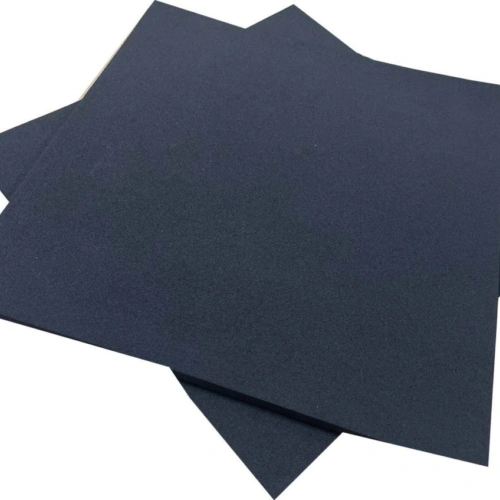
Thin-gauge polyethylene foam allows for better utilization of available space, design optimization, and reduced material consumption whenever technical specifications allow.
This trend has gained particular relevance in sectors such as automotive, where OEM manufacturers and Tier suppliers seek to balance performance, cost, and space availability.
Furthermore, the incorporation of new components and technologies makes thickness optimization increasingly critical right from the initial design stages.
Why Use Thin Thicknesses in Polyethylene Foam?
Shifting toward thinner gauges is not simply about using less material. It is about selecting a thickness that delivers the necessary properties for the application without creating unnecessary volume.
A properly specified polyethylene foam can be used for separation, cushioning, protection, insulation, and vibration control. If the design permits a reduction in thickness, you can make better use of space and achieve material reduction.
In automotive components, for instance, gaskets and protective elements must be installed in increasingly compact spaces. The integration of electronic systems and emerging technologies increases the number of parts inside a vehicle, making every bit of available space crucial.
In this context, an industrial polyethylene foam manufactured to the right gauge helps develop sleeker solutions without unnecessarily altering the overall assembly design.
Thin Foam for BSR Applications
A particularly relevant application lies in preventing BSR—short for Buzz, Squeak, and Rattle—which describes unwanted noise generated by contact or movement between components.
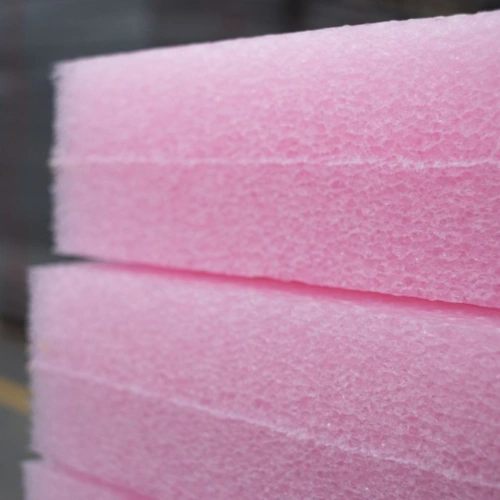
Polyethylene foam Polyethylene foam can serve as part of engineered solutions designed to separate surfaces, lower friction, and control specific movements between parts.
This need is even more vital in electric vehicles, where operation generates significantly less powertrain noise than traditional combustion engine vehicles.
Consequently, internal noises become far more noticeable, making acoustic control and BSR prevention key priorities during engineering. However, reducing foam thickness demands extreme precision.
An excessively thin gauge might fail to deliver the performance required for a given application, whereas a overly thick gauge wastes valuable space.
That is why selecting the right material requires evaluating key factors such as compression, density, tolerances, geometry, temperature range, and the part's specific role.
Benefits of Lightweight Materials
Lightweight materials are increasingly essential for industries seeking to optimize weight, space, and raw material consumption. In automotive manufacturing, these characteristics directly contribute to more efficient overall designs.
Polyethylene foam Polyethylene foam delivers a combination of low weight and converting versatility, enabling the development of diverse protective and insulating components. However, leveraging a lightweight material is not simply about picking a thinner sheet.
The real advantage lies in striking the ideal balance between mechanical performance and the volume of material used.
How to Reduce Material Without Sacrificing Quality
Material reduction must stem from thorough technical analysis. Not every application allows for a thinner gauge while maintaining identical performance, making it necessary to evaluate the operating conditions of each component.
An effective strategy may involve empirical testing, tolerance reviews, and selecting the proper foam density. This turns thickness optimization into an engineering solution rather than just a cost-cutting tactic.
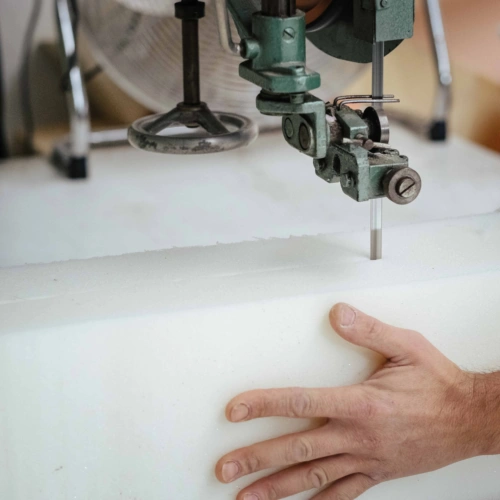
To achieve consistent, ultra-thin gauges, precision converting processes are essential. Worldwide Foam operates a Fecken-Kirfel horizontal skiver equipped with a vacuum table, specifically engineered to convert various foam types to exact thickness targets while holding tight tolerances.
This capability makes it possible to process materials into ideal formats for projects requiring tight dimensional accuracy across entire rolls and sheets.
Packaging Efficiency and Industrial Applications
Thickness optimization goes beyond automotive engineering. In packaging efficiency applications, reducing gauge helps maximize interior space within boxes, containers, and protective dunnage systems, provided the required protection level is maintained.
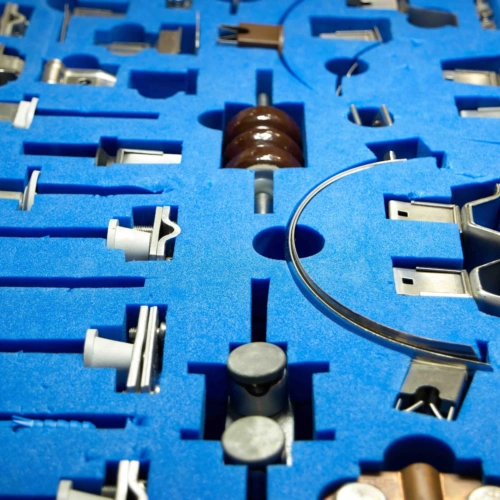
A properly gauged polyethylene foam can be converted into class-A separators, protective linings, custom inserts, and other dunnage components.
This is particularly beneficial in high-volume operations, where minor reductions in material consumption yield a compounded impact across production and supply chain workflows.
Worldwide Foam: Precision in Thin Gauges
While standard processes can limit the manufacturing of ultra-thin gauges, Worldwide Foam possesses the advanced technology and converting capabilities to fulfill project requirements demanding custom thin gauges.
Our extensive experience in processing polyethylene foam allows us to evaluate alternative materials and deliver tight tolerances tailored to specific industry demands.
From automotive parts and BSR solutions to industrial packaging and packaging efficiency, the goal is always achieving the perfect balance between performance, space utilization, and material usage. Does your project require thin-gauge foam with tight tolerances?
Contact Worldwide Foam today and tell us about your application. Our team can help you evaluate the right polyethylene foam and thickness to optimize space, material, and overall performance.


Worldwide Foam

We are leaders in the supply of closed cell polyethylene foam in Mexico. We support various industries by offering a wide range of products and complementary services.