
| August 14, 2026
When a company looks for materials to protect products during transport or to manufacture industrial inserts, one of the most common questions is: Should you choose EVA foam or XLPE?
Although both materials belong to the polyolefin family and share some characteristics, each offers specific advantages depending on the application.
Making the right decision not only influences the performance of the material, but also the quality of the final product, the durability of the packaging, and safety during transport.
Moreover, factors such as chemical resistance, impact absorption, and ease of transformation are crucial for industries such as automotive, electronics, medical, and manufacturing.
In this article, you will learn the main differences between EVA foam and XLPE, when to use each, and why Worldwide Foam offers specialized solutions for each project.
What is EVA foam?
EVA foam (Ethylene Vinyl Acetate) is a material known for its flexibility and softness. However, these same characteristics can be a disadvantage in applications that require greater cushioning or resistance to constant loads.
Being a softer and more elastic material, it can deform more easily under prolonged pressure, which limits its performance in uses where maintaining shape or withstanding high-intensity repetitive impacts is required.
Also, its high flexibility can translate into less dimensional stability compared to other foam materials.
What is XLPE and why does it stand out in the industry?
XLPE (Cross-Linked Polyethylene) is a foam obtained through a chemical process that creates bonds between the molecules of polyethylene known as closed cell, forming a much more stable three-dimensional structure.
These characteristics make it one of the most used closed cell materials for industrial applications where product protection is critical.
Unlike other materials, XLPE maintains its performance even under demanding conditions of transport, storage, or constant handling.
EVA Foam vs. XLPE
The manufacturing process of XLPE creates a much more uniform microcellular structure. This allows XLPE to better maintain its shape after multiple impacts or compression cycles.
EVA foam, on the other hand, offers a softer feel but generally has less structural rigidity when high-performance industrial applications are required.
Impact Absorption
One of the most important aspects when selecting a material is product protection. EVA foam absorbs impacts efficiently in light or sports applications.
However, when it is necessary to protect delicate components during logistics processes, XLPE often offers a better combination of cushioning and recovery.
Therefore, it is widely used as foam packaging for electronic equipment, automotive parts, medical devices, and industrial tools.
Resistance to Moisture and Chemicals
Another important difference is resistance to the environment. Thanks to its cross-linked structure, XLPE virtually does not absorb water, oils, or many chemicals.
This property prolongs the material's lifespan and maintains protection even in complex industrial environments.
Which offers better quality for industrial applications?
Talking about quality involves evaluating much more than the appearance of the material. True quality depends on factors such as:
Durability: XLPE withstands intensive use without deforming easily.
Protection: Its structure provides greater safety during transport and storage.
Precision: It can be converted into die-cut pieces with excellent finish.
Stability: It retains its properties during long periods of use.
For these reasons, many companies opt for XLPE when they require permanent protection solutions.
Applications where XLPE excels
When the goal is to protect high-value products, XLPE often becomes the best alternative. Among its main applications is polyethylene foam packaging, which allows immobilizing products during transport, reducing damage from bumps or vibrations.
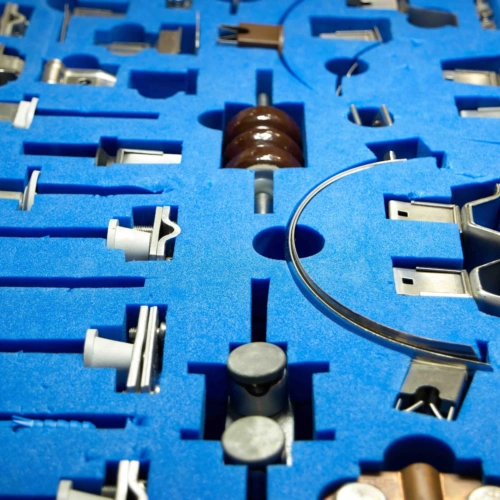
Additionally, it adapts perfectly to the contour of tools, electronic equipment, or medical instruments, allowing protection of components during assembly and logistics. Lastly, its closed cell structure protects and cushions delicate equipment.
Polyethylene Foam: Does the price determine which to choose?
Many companies seek information about the price of polyethylene foam before selecting a supplier. However, making the decision solely based on the initial cost can be counterproductive.
A lower-performing material can result in damage to goods or an increase in returns, as well as greater waste or additional logistical costs. Therefore, it is advisable to analyze the total cost of operation and not just the purchase price.
Worldwide Foam offers specialized advice to help select the right material, considering performance, application, and budget.
Worldwide Foam: solutions for each application
At Worldwide Foam, we understand that each industry has different needs. Therefore, we offer XLPE and other high-performance technical foams for industrial applications, customized packaging, inserts, returnable packaging, and specialized protection.
Our team analyzes each project to recommend the most suitable material based on the level of protection required, the manufacturing process, and operating conditions.
More than selling materials, we develop solutions that help optimize processes, protect products, and improve operational efficiency.
If you are looking for a supplier with experience and a wide portfolio of technical foams, Worldwide Foam is your ally to find the best alternative for each application. Are you looking for the best option between EVA foam and XLPE for your industrial project?
At Worldwide Foam, we have high-performance materials, specialized advice, and customized solutions for packaging, inserts, and product protection. Contact us today and find the ideal material for your needs.


Worldwide Foam
We are leaders in the supply of closed cell polyethylene foam in Mexico. We support various industries by offering a wide range of products and complementary services.